
Best AI Subtitle Generator for Fast Scaling
27/6/2026
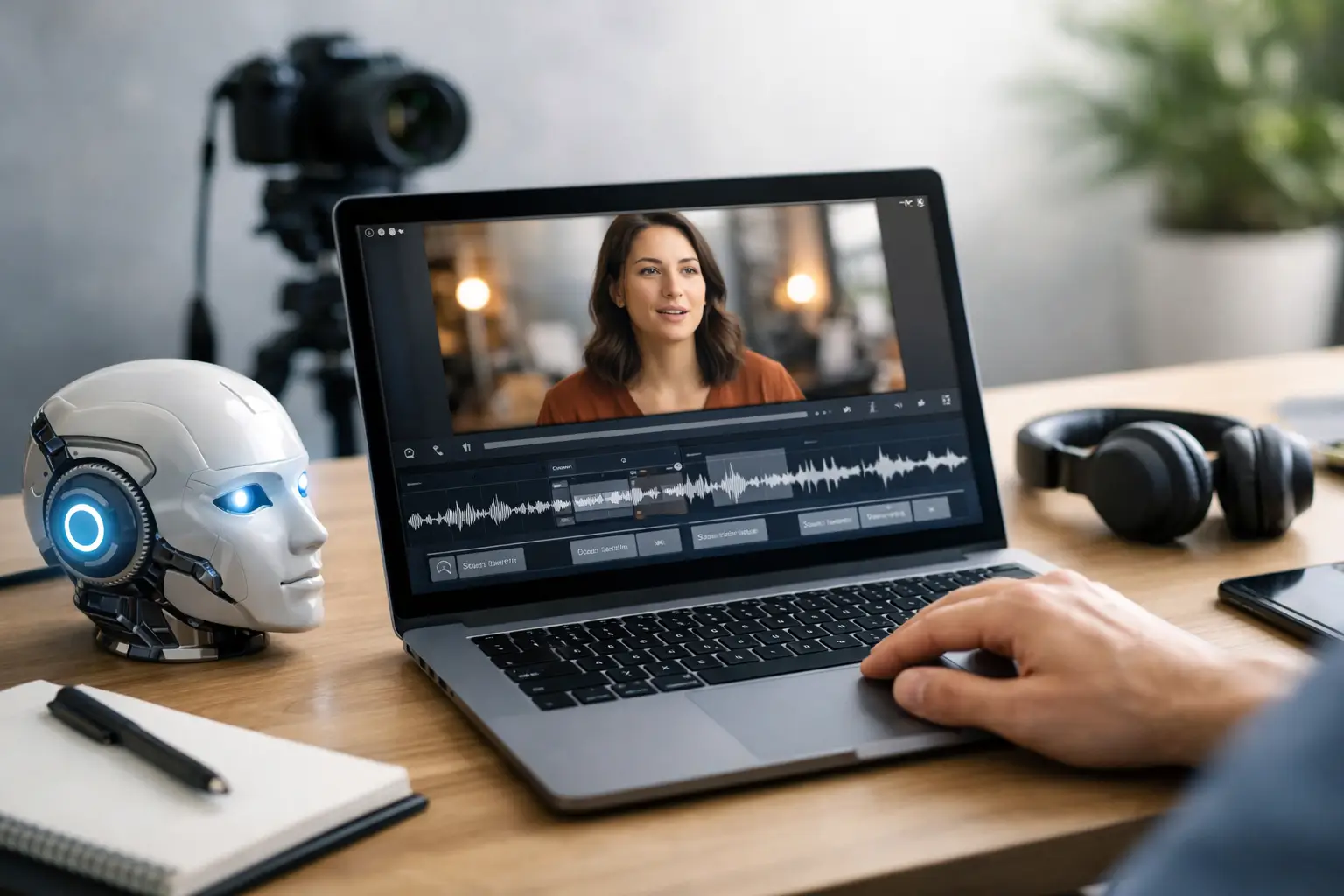
If your team is still exporting video, sending it to a freelancer, waiting for captions, fixing timings by hand, and then repeating the process for every new language, the bottleneck is not your content. It is your workflow. The best ai subtitle generator cuts that delay down to minutes, not days, while making multilingual video far easier to scale.
That matters well beyond social media. Training teams need accessible onboarding videos. Universities need lecture subtitles for mixed-language cohorts. Event organisers need live sessions understood by international audiences. Customer support and healthcare teams need clarity, not guesswork. In each case, subtitles are not a finishing touch. They are part of how people understand, trust, and act on what they are watching.
What makes the best AI subtitle generator
A strong subtitle tool does more than turn speech into text. It has to recognise different accents, handle variable audio quality, separate speakers where possible, and time each line so viewers can actually follow it. Speed matters, but speed on its own is not enough if every file needs a long clean-up afterwards.
Accuracy is the first filter. If the transcript is weak, every subtitle line will inherit those errors. The next test is timing. Good subtitles appear at a readable pace, stay on screen long enough, and break naturally. A tool can be technically fast and still create a poor viewing experience if captions flash by, split awkwardly, or drift out of sync.
Language support is the third factor. For many organisations, subtitles are not only about English captions. They are part of a broader localisation workflow. If you need to communicate across Europe, the Middle East, Asia, or Latin America, the best option is usually a platform that can subtitle, translate, and often dub content in one place. That removes handoffs and reduces room for error.
Best AI subtitle generator features that actually matter
Many platforms advertise the same basics, so the real difference comes from workflow fit. If you are comparing tools, look closely at how they perform in day-to-day use rather than headline claims alone.
Browser-based access is a practical advantage. No installation means faster onboarding, fewer IT delays, and easier use across distributed teams. That matters for operations leaders and academic teams who want adoption now, not after a technical rollout.
Real-time capability is another major differentiator. Some tools are built mainly for uploaded files. Others support live events, meetings, webinars, and broadcasts with automatic subtitles appearing as people speak. If your work includes conferences, hybrid teaching, live customer communication, or multilingual events, this is not a minor feature. It changes what the tool can do for your organisation.
Translation quality also deserves scrutiny. Some subtitle generators can create captions in the source language but struggle when asked to produce clear translated subtitles. Others are built for multilingual communication from the start. That difference becomes obvious when you need to move from one video into ten language versions without rebuilding the process every time.
Then there is editing control. Even the best AI systems benefit from human review in some cases, especially for brand terminology, technical vocabulary, names, or regulated content. The right platform should make editing easy rather than forcing teams into a clumsy export-and-reimport cycle.
It depends on your use case
There is no single best ai subtitle generator for every team in every scenario. The right choice depends on whether you need recorded video subtitles, live captions, translated subtitles, or an all-in-one multilingual workflow.
For a solo creator posting short-form content, a lightweight subtitle tool may be enough. Speed and styling could matter more than deep language support. For an enterprise training team, consistency, scale, and file handling are usually more important. For a conference organiser, live subtitle delivery with minimal latency may be the deciding factor. For healthcare or support operations, clarity, privacy, and reliability matter more than flashy editing templates.
This is where buyers often make the wrong comparison. They compare subtitle generators only on caption output, when the real operational question is broader: how quickly can your team go from spoken content to accessible, multilingual communication?
Why all-in-one platforms often win
If subtitles are only one part of your language workflow, separate tools can slow everything down. One platform for transcription, another for subtitle editing, a third for translation, and a fourth for dubbing sounds manageable at first. In practice, it creates delays, version confusion, and extra admin.
An all-in-one platform removes those steps. You upload or stream once, generate subtitles, translate into multiple languages, and move into dubbing or broader localisation without restarting the job. For organisations with recurring multilingual needs, that is usually the more efficient model.
This is where platforms such as iLoveToTranslate stand out. Rather than treating subtitles as a standalone feature, the platform places them inside a wider multilingual communication stack that includes transcription, live interpretation, document translation, dubbing, and AI voice tools. For teams serving international audiences, that can be a better long-term fit than stitching together separate products.
How to evaluate subtitle quality before you commit
The fastest way to assess a tool is to test it against your real content. Product demos can look polished, but they rarely reflect your actual audio conditions.
Use a sample that includes natural speech, not studio-perfect narration. If your team runs webinars, test a webinar. If you subtitle training videos, use a training clip with your usual pace and terminology. If you support multilingual speakers, include mixed accents. A good result on ideal audio tells you very little about everyday performance.
Check four things. First, how accurate is the transcript before edits? Second, are subtitle timings sensible and readable? Third, how well does the platform handle translation into your target languages? Fourth, how long does the whole process take from upload to usable output?
That final point is easy to underestimate. A tool with slightly higher raw accuracy may still be the worse choice if the workflow is slow, complex, or split across multiple systems. Teams do not buy subtitle technology for benchmarks. They buy it to remove friction.
Common trade-offs to expect
Every subtitle platform involves trade-offs. The goal is not perfection. It is the right balance for your needs.
Highly automated tools are fast, but some content will still need review. That is especially true for jargon-heavy sectors, fast overlapping speech, and poor recordings. Live subtitling is powerful, but it may involve minor latency or occasional phrasing adjustments compared with manually prepared captions. Broad language coverage is valuable, but quality can vary slightly between language pairs.
These are normal trade-offs. What matters is whether the platform handles them well enough for your environment. For most business users, the best ai subtitle generator is the one that gives strong first-pass accuracy, supports the right languages, and fits existing operations without creating more work.
A smarter buying question
Instead of asking which subtitle tool has the most features, ask which one helps your team publish, present, and communicate faster across languages. That question usually leads to a clearer decision.
If your needs are occasional and simple, a basic subtitle generator may do the job. If your organisation works across departments, regions, or audience groups, a more complete multilingual platform will often create more value. You are not only buying captions. You are buying speed, accessibility, and the ability to reach more people without multiplying manual effort.
Subtitles have moved from nice-to-have to operational necessity. The teams moving fastest are not the ones doing more manual editing. They are the ones using AI to reduce turnaround time, expand language access, and keep communication clear at scale.
Choose the platform that matches how your organisation actually works today, and where you expect it to grow next. The right subtitle generator should not just add text to video. It should make multilingual communication easier from the first file to the thousandth.
Ξεκινήστε δωρεάν
Δημιουργήστε τον λογαριασμό σας και δοκιμάστε τη μετάφραση σε πραγματικό χρόνο. Χωρίς κάρτα, χωρίς ταλαιπωρία.